
The Importance of Safety in Manufacturing
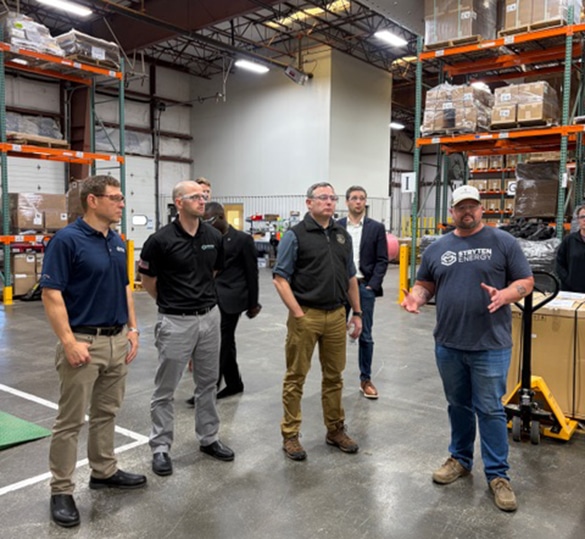
As we recognize National Safety Month, it is important for industrial workers to keep safety in manufacturing environments as a top priority year-round. And for Stryten Energy, safety is a core value. Much like professional airline pilots who perform thorough pre-flight checks and follow strict protocols to ensure every flight is safe, manufacturing workers, or “industrial pilots,” can take important steps to protect their own health and safety, as well as that of their crew.
Self-Care is Part of Safety
Safety in manufacturing includes self-care, which begins before a worker even steps onto the floor. Hydration and rest are two vital components of self-care.
Summer heat can take its toll on manufacturing employees. It takes time to acclimate to a hot manufacturing environment, and even then, heat-related illnesses are a considerable risk. Like a pilot preparing for a high-altitude flight, staying hydrated and properly acclimated to conditions is essential. Drinking plenty of water and electrolytes or resting in a cool room can make a big difference while at work. If pilots are not well-nourished and physically fit to operate a plane safely, they might experience decreased physical performance or cognitive impairment, which could lead to serious safety risks. In the same way, “industrial pilots” must remember the 2:1 ratio of water to electrolyte drinks to help aid in reducing such serious safety risks. For every one cup of sports drink or electrolyte beverage, drink two cups of water to ensure the proper balance of sodium and potassium.
Similarly, being well rested is integral to safe performance. A pilot would not be able to safely operate an aircraft after being awake for 18-24 hours. Similarly, an industrial worker may have trouble working safely if in a sleep-deprived state. According to the National Library of Medicine, sleep deprivation of 18 hours is equivalent to a blood alcohol level of 0.05 percent. Going without sleep for 24 hours equates to a blood alcohol level of 0.10 percent, which is well above the legal limit in all 50 states.
A worker who is dehydrated or sleep-deprived might experience decreased coordination and reaction time, as well as diminished judgment and reduced cognitive ability. A pilot’s lack of preparation could risk the safety of everyone on board the plane. Likewise, impairment not only puts the manufacturing worker’s health and safety at risk, but it could also endanger others. Thus, self-care is a critical component for safety in manufacturing.
Personal Safety on the Job
Once “industrial pilots” are on the job, they must follow all required safety rules. The most important safety rule is wearing proper personal protective equipment (PPE). As a pilot would not consider flying without a headset, oxygen mask, or harness, an “industrial pilot” should never walk onto the manufacturing floor without eye and ear protection. In some instances, additional PPE, such as coveralls or a specialized uniform, respirator or gloves, may be necessary. Routine hand washing is also a must for anyone on the plant floor, as well as for general well-being.
Situational awareness is yet another safety tool for “industrial pilots.” Like professional pilots use the plane’s radar system to be aware of their surroundings, “industrial pilots” must be aware of moving equipment like forklifts. This includes being mindful of where team members are standing in relation to heavy machinery and other potential hazards on the plant floor. They should always know where eyewash stations and fire extinguishers are located and be able to identify the building exits in case of emergency.
In addition, an airline pilot must be aware of other crew members aboard the flight and have an understanding of their roles. All crew members, whether in the sky or on the ground, have clearly defined roles and responsibilities, and each one is key to the success of the team. Workers in manufacturing situations are no different. Mutual awareness of each role and teamwork is essential for the operation to run safely and smoothly.
Safety Is Everyone’s Responsibility
Safety in aviation is clearly a team goal, from the crew in the sky to the crew on the tarmac. The same applies in manufacturing, and team members can protect one another by remaining alert for warning signs and at-risk behaviors in others. Every worker has the right to a safe working environment. Stryten Energy believes in the “see something, say something” approach to safety. All “industrial pilots” should feel empowered and are encouraged to speak up, without fear of reprisal, if a situation is not safe or if someone on the team is not following proper safety protocols.
Contrary to popular belief, safety rules are not implemented and enforced to make workers’ lives difficult. Instead, these rules and regulations provide an environment that allows industrial athletes to focus on their work, so they can safely return home to their loved ones at the end of each day.

Lindsey Powell
Summer Intern, Corporate Communications